Can Thailand win back travelers from China after the pandemic?
Nearly 11 million people from China visited Thailand in 2019. In May 2020 none can, and the country is working out how to persuade them that the next trip will be a safe one.
3 min read
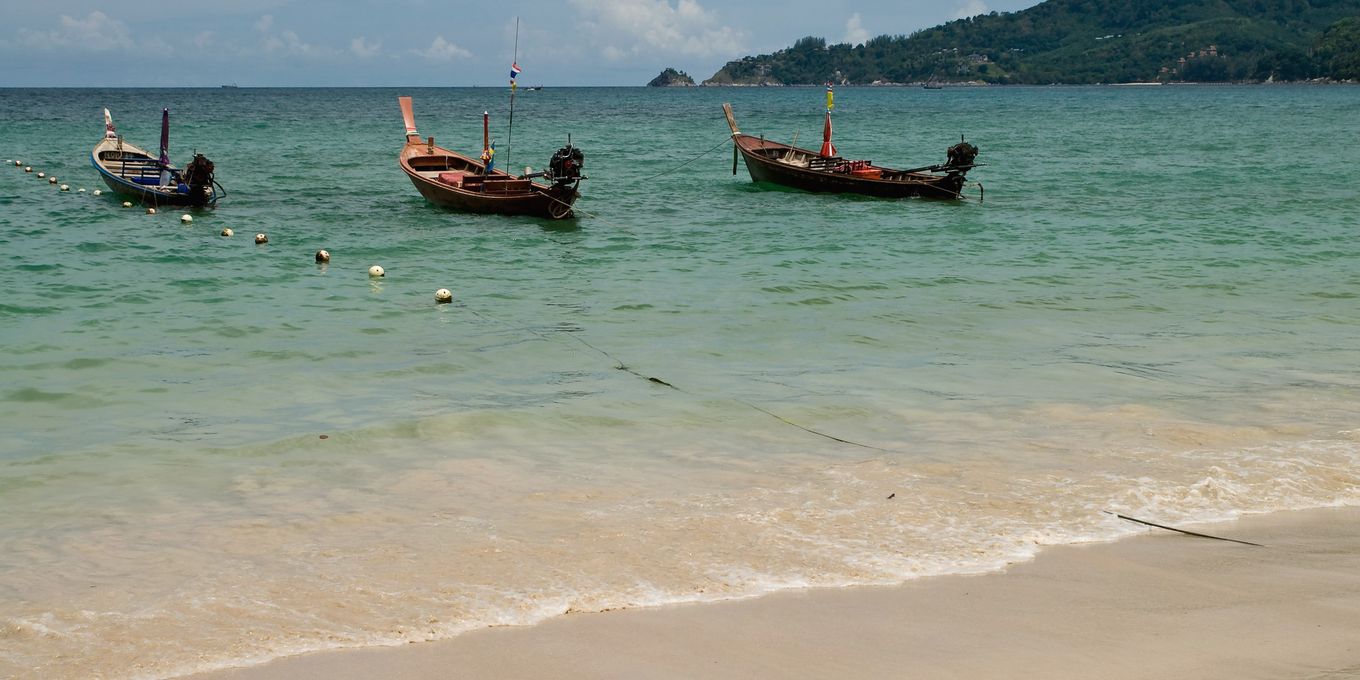
For twenty years Thailand has sold itself on variety: sheltered bays with fine white sand, sprawling night markets, all-night parties and some of the most lavish hotels in Asia. As the country comes through the COVID-19 outbreak with one of the better records in the region, the message has to change. Before it can reopen to China, its most valuable market, it has to convince travelers that a Thai holiday is safe.
Some hotels are already acting on that. Aleenta Phuket-Phang Nga, a five-star beach resort on the coast north of Phuket, has advertised its Mandarin-speaking staff and its menus for Chinese guests on Chinese booking sites for years. It now also shows prospective guests a hygiene certificate. Its parent company, the AKARYN Hotel Group, says hygiene has become its first priority and that a resort made up mostly of large, separate villas lends itself to distancing.
Domestic travel over recent weeks has given Thai hotels and tour operators a chance to practice cleaning and distancing routines before foreign visitors return. Arrivals from China had been expected to pass 11 million in 2020. How many of them eventually come will turn on what governments allow, whether flights resume, and whether travelers feel like going.
Government
Thailand has adapted to travel from China before. Helped by visas on arrival, Chinese arrivals rose from about 1.2 million in 2010 to 10,994,721 in 2019. In late 2018 the government also began waiving the fee for the visa on arrival, and it has extended the waiver since. Some read it as an attempt to repair the damage done by the sinking of the Phoenix off Phuket in July 2018, in which 47 Chinese tourists died.
Since the pandemic halted tourism, the Tourism Authority of Thailand, which runs five offices in China, has kept up a steady presence on Chinese social media with messages of support and practical travel information. At a time when several governments are openly at odds with Beijing over the virus, the absence of blame from Bangkok removes one diplomatic obstacle to reopening.
Flights
Cheap flights built this market. Starting in 2012, budget carriers linked Thailand with over a dozen cities in China, and the aviation consultancy CAPA counts a fivefold increase in seat capacity over the following six years. Commercial passenger flights into Thailand remain suspended until at least May 31. After that, some form of travel bubble with China, an idea Vietnam is already considering, would be needed.
Gateways such as Bangkok, where screening can be tightly controlled, are likely to reopen first, bringing back business travelers before independent tourists and small groups. Bill Barnett, managing director of C9 Hotelworks, a hotel consultancy based in Phuket, makes the point bluntly: a destination that travelers cannot fly to is one they cannot stay in.
Demand
For the next few months travelers in China are sticking to short domestic trips. Even so, Thailand’s record against the virus, with 56 deaths so far, and its closeness to China place it near the top of the list for the first trips abroad. A survey by C9 Hotelworks and Delivering Asia Communications, carried out in mid-April among more than a thousand people in China’s first-tier cities, found 53 percent planning to travel abroad in 2020 and 71 percent saying they would like to visit Thailand. Asked how they would travel, 83 percent chose to go independently rather than with a group. Ashley Dudarenok, founder of the China marketing agency Alarice, says Chinese travelers regard short-haul trips as safer and more flexible, and that Thailand’s low cost only adds to the appeal. Barnett adds that the market is best reached digitally, by people who understand its language and culture.
The exchange rate helps as well. The yuan has been gaining against the baht since a low point at the end of 2019, which stretches a Chinese visitor’s budget further. Barnett considers currency an underrated influence on arrivals and sees the strong yuan as good news for travel. For an industry worth more than a tenth of Thailand’s economy, that is a rare bright spot.
Short and inexpensive flights give Thailand a natural advantage once they return, but how the country has handled the pandemic will count for more in bringing visitors back. Whether the much discussed “revenge travel” after lockdown materializes is still unknown. Whatever recovery comes will rest on hotels, airlines and officials being able to show that a trip is safe.